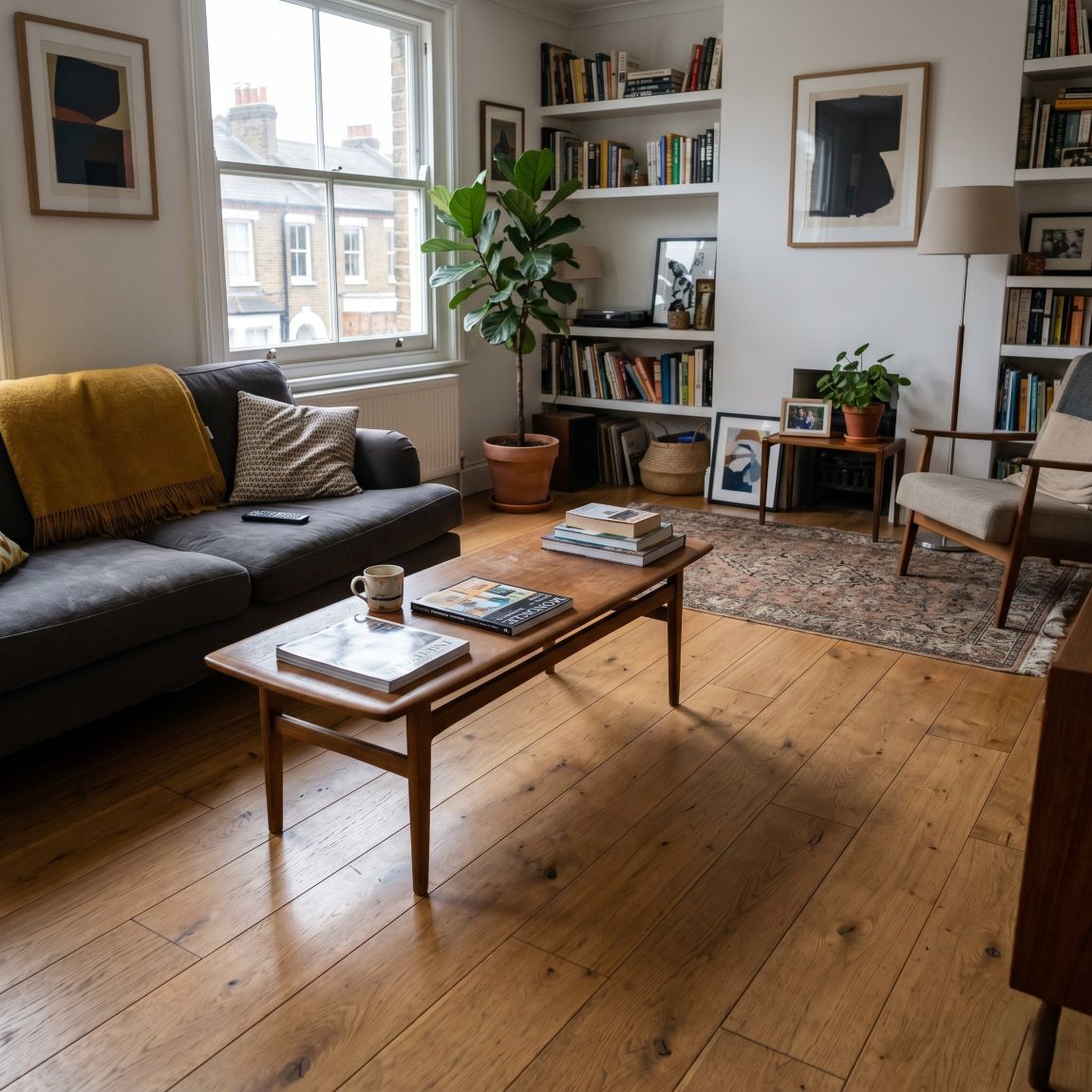
Engineered oak and laminate floors look reassuringly solid underfoot, which makes it easy to forget how little it takes to ruin one. Both are built around materials that swell, lift and warp the moment too much water finds its way into them, and the most common cause of a wrecked floor is not neglect but over-enthusiastic cleaning – a sopping mop, a steam cleaner, or a puddle left to sit. The frustrating truth is that the instinct to clean a floor by drowning it is precisely the instinct that destroys these surfaces. Yet they are genuinely easy to keep immaculate once you understand what they are made of and why moisture is the enemy. The whole job comes down to cleaning with the smallest amount of water that does the work, choosing products that protect rather than strip the finish, and acting fast when something spills. Here is how to keep engineered oak and laminate looking their best for years without ever risking a warp.
Why Engineered Oak and Laminate Warp in the First Place
The layered cores that swell when water gets in
Both floor types share a vulnerability that comes straight from how they are built, and understanding that construction is the key to cleaning them safely. Neither is a solid plank. Engineered oak consists of a real oak wear layer, usually a few millimetres thick, bonded on top of a core of plywood or high-density fibreboard. Laminate goes further from natural wood still: a printed photographic layer that imitates timber, sealed under a clear protective wear layer, all sitting on a core of high-density fibreboard, or HDF.
That fibreboard core is the weak point. It is essentially compressed wood fibres, and like a digestive biscuit dropped in tea, it absorbs water greedily and swells when it does. When moisture penetrates – through a seam, an unsealed edge, or simply by sitting on the surface long enough to work its way down – the core expands. The result is the damage everyone dreads: boards that cup with raised edges, joints that peak and lift, swelling that pushes planks out of shape, and edges that bubble or chip. Crucially, this damage is almost always permanent, because once the compressed fibres have expanded they do not return to their original dimensions when they dry. There is no cleaning a warped board back to flat. This is why prevention, not cure, governs everything about looking after these floors.
Know Your Floor: Engineered Oak Versus Laminate
Why the two look similar but clean differently
Although they are often mentioned in the same breath, engineered oak and laminate are different materials and the differences change how you should treat them. Engineered oak has a genuine timber surface, which means it carries a real wood finish – either a lacquer or a penetrating oil – and behaves in many ways like solid wood, just more stable. It can usually be lightly sanded and refinished once or twice over its life, and an oiled engineered floor will benefit from occasional re-oiling to keep it nourished and protected.
Laminate has no real wood on its surface at all. The wear layer is a tough melamine coating over a printed image, which makes it hard-wearing and scratch-resistant, but it cannot be sanded or refinished. What you have is what you keep, so protecting that wear layer from scratches and protecting the HDF core from water are the only games in town.
The practical upshot is that laminate is generally more sensitive to standing water at its seams, since there is no solid wood to offer any buffer, while engineered oak’s finish type dictates which products suit it. Knowing whether your engineered floor is oiled or lacquered matters, because the two want slightly different care. If you are unsure which floor you have, a genuine oak surface will show real grain variation and slight imperfections, whereas laminate often repeats the same printed pattern across multiple boards.
Start Dry: The Routine That Prevents Most Damage
Sweeping, vacuuming and grit as the hidden enemy
The single most important habit for both floors involves no water at all. The everyday enemy of an engineered or laminate surface is not dirt but grit: the fine particles of sand and street debris tracked in on shoes, which act like sandpaper underfoot and grind tiny scratches into the wear layer over time. Once that surface is scratched, especially on laminate, there is no polishing it out, so keeping grit off the floor is the most effective protection you can give it.
Sweep with a soft broom or, better, run a microfibre dust mop over the floor regularly to gather fine particles without scratching. Vacuuming works well too, with one important caveat: use the hard-floor setting or a model designed for it, and never run a rotating brush bar or beater across the surface, as the stiff bristles can scuff and scratch. Lift the brush bar or switch it off if your vacuum allows.
A little prevention multiplies the effect of this routine. Placing doormats at entrances catches the worst of the grit before it reaches the floor, and felt pads under furniture legs stop them gouging the surface when chairs and tables move. In an entrance-heavy home, a no-shoes policy does more to preserve these floors than any cleaning product. Get the dry routine right and the wet cleaning, when it comes, has very little left to do.
The Damp-Mop Method: Just Enough Moisture, Never More
Technique for cleaning without soaking the boards
When the floor does need a proper clean, the governing principle is simple: damp, never wet. A mop should be wrung out until it is barely moist, leaving the floor very lightly damp and dry to the touch within a minute or so. If you can see water sitting on the surface, streaking, or pooling in the seams, there is far too much of it, and you are risking the very damage you are trying to avoid.
A flat microfibre mop is the ideal tool, because it holds little water, cleans efficiently and dries fast. Spray-mop systems that mist a fine amount of cleaner directly onto the floor are excellent for exactly this reason, since they put down a controlled, tiny quantity of liquid rather than the floodwater a traditional string mop and bucket deliver. Work in the direction of the boards, in manageable sections, and rinse or swap the mop pad as it picks up dirt so you are not pushing grime around.
The finishing step matters as much as the mopping. If any dampness lingers, go over the floor with a dry microfibre cloth to lift it, paying particular attention to seams and edges where water would otherwise have time to seep into the core. Never let a floor air-dry with visible moisture on it, and never leave a wet mop or cloth lying on the surface. The whole approach is about minimising the time any water spends in contact with the floor.
Products That Are Safe, and the Ones That Quietly Ruin Floors
pH-neutral cleaners and the mistakes to avoid
What you put on the floor matters as much as how much water you use. The safe choice for both engineered oak and laminate is a pH-neutral cleaner, ideally one formulated specifically for wood or laminate flooring. Neutral products clean effectively without stripping finishes or leaving residue, and they suit the surface rather than fighting it. For oiled engineered floors in particular, a dedicated oiled-floor cleaner maintains the protective layer rather than wearing it away.
Several popular cleaning ideas quietly cause damage and are best avoided entirely. Steam mops are the most dangerous of all: they force hot water vapour into the seams and can lift the finish, damage adhesives and swell the core, and they have no place on either floor type despite frequent claims of being safe for sealed floors. Vinegar and other acidic or alkaline cleaners, often recommended as natural solutions, gradually dull and etch wood finishes and the laminate wear layer, so the bottle under the sink that works wonders on glass is the wrong choice here. Wax, oil soaps and all-purpose polishes leave a cloudy build-up that attracts dirt, creates a slippery film and complicates any future refinishing.
The pattern is consistent: anything abrasive scratches, anything acidic etches, anything that leaves residue builds up, and anything involving heat and steam warps. A simple neutral cleaner used sparingly outperforms all of them and protects the floor while it cleans.
Spills, Stains and Long-Term Protection
Fast response, gentle stain removal and keeping floors sound
Because standing water is the chief threat, the golden rule for spills is speed. Whatever lands on the floor – water, wine, juice, a pet accident – should be wiped up immediately rather than left to sit, because even a small puddle given enough time will work its way into a seam. Blot it dry, give the spot a quick wipe with a barely damp cloth and a little neutral cleaner if it was sticky or staining, and dry it thoroughly afterwards.
Most everyday marks lift with this gentle approach. For more stubborn spots, slightly more cleaner on a cloth and a little patient rubbing will usually do it, while sticky residues such as chewing gum or candle wax respond to being hardened with an ice cube and then lifted carefully with a plastic scraper rather than a metal blade. The instinct to scrub hard or reach for an abrasive pad is the one to resist, since a scratch is permanent where a stain rarely is.
Longer-term protection is mostly about the habits already described, kept up consistently: grit controlled at the door, felt pads under furniture, spills caught fast, and water kept to a minimum. Oiled engineered floors will need re-oiling periodically as the manufacturer advises, and rugs in high-traffic areas spread the wear. Treated this way, an engineered oak floor can last for decades and a laminate floor for many years, looking close to the day they were laid – and never once threatened by the warping that catches out so many well-meaning cleaners.