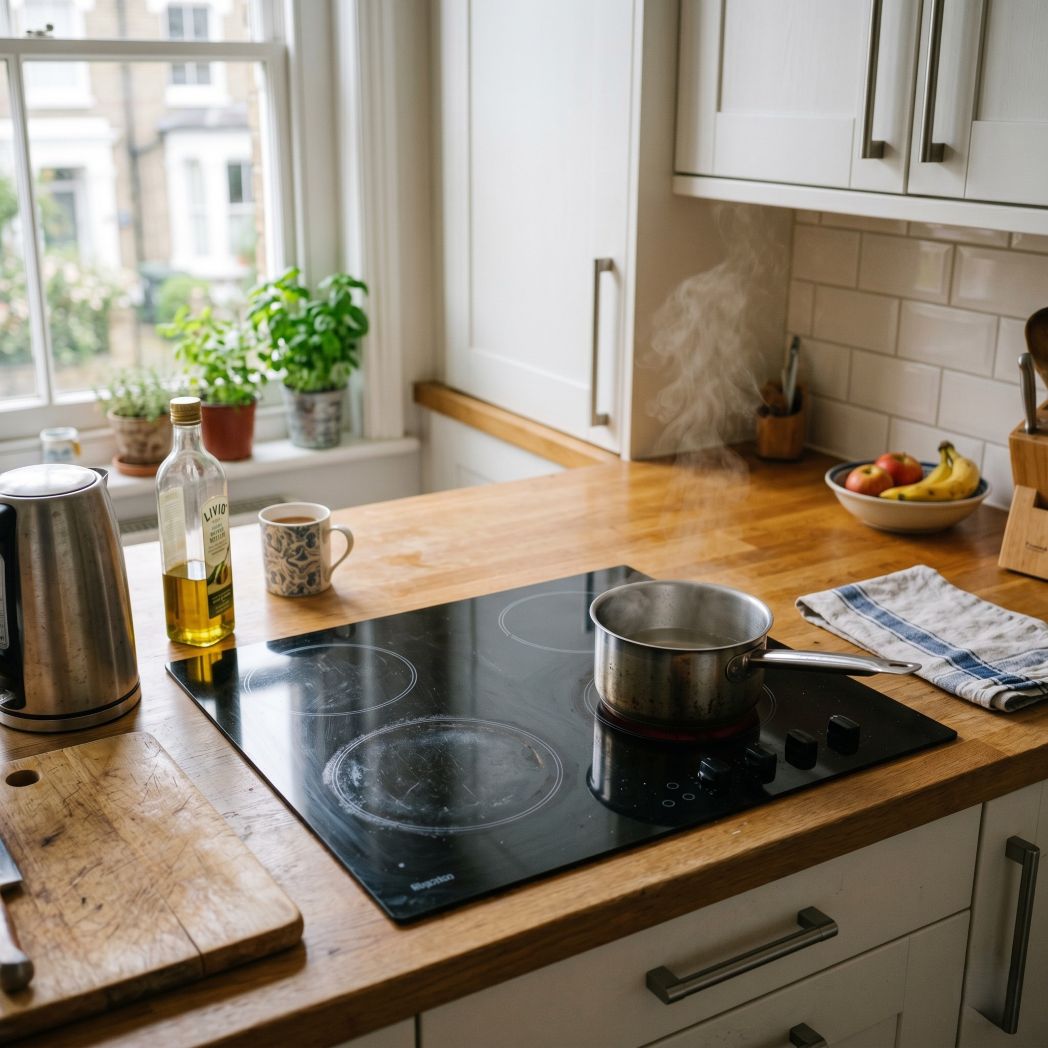
An induction hob is one of the most satisfying surfaces in a kitchen when it is clean and one of the most disheartening when it is covered in baked-on splatters and faint scratches that catch the light. The smooth glass-ceramic top that makes these hobs so easy to wipe is also the thing that makes people nervous, because a single careless scrub with the wrong pad can leave permanent marks across an expensive appliance. The reassuring news is that keeping an induction hob spotless is genuinely simple, and the surface is far tougher than it looks. The catch is that it is tough in some ways and surprisingly vulnerable in others, and most damage comes from treating it like any other surface rather than understanding what it can and cannot take. Get the routine and the tools right and the glass stays flawless for the life of the hob. Here is exactly how to clean it safely, deal with the stubborn cases, and avoid the handful of mistakes that scratch or pit the glass for good.
Why Induction Glass Scratches (and What It Can and Can’t Take)
Understanding the glass-ceramic surface you’re cleaning
To clean the surface safely it helps to know what it actually is. The top of an induction hob is not ordinary glass but a glass-ceramic, a specially engineered material that withstands high temperatures and the weight of heavy pans without cracking under normal use. It is hard, smooth and non-porous, which is why most spills wipe straight off and why the surface resists staining far better than many people expect.
Where it is vulnerable is to two specific things: abrasion and certain chemical reactions. Anything harder or grittier than the surface itself will scratch it, which means scouring pads, wire wool, scouring powders and even a cloth carrying trapped grit can leave fine lines that never come out. Dragging a pan with a rough or dirty base across the glass does the same. The second vulnerability is to a small group of substances, sugar chief among them, that can chemically pit the surface if they melt onto hot glass and are left to cool in place.
Induction has one quirk worth understanding. Unlike a radiant ceramic hob, it heats the pan directly rather than the surface, so the glass itself stays relatively cool and spills are less likely to burn on instantly. But residual heat passes back from the hot pan into the glass beneath it, so the surface still gets hot enough to bake on a spill that is left there. The hob is easier to keep clean than older types, not immune to mess.
The Daily Wipe: Stopping Mess Before It Bakes On
A quick after-cooking routine that prevents most problems
The simplest way to avoid ever needing aggressive cleaning is to wipe the hob down after every use, and on an induction surface this takes seconds. Once the hob has cooled enough to touch safely, a soft damp cloth or microfibre with a drop of washing-up liquid lifts the day’s splashes and grease before they have a chance to harden into something that needs scraping. The longer a spill sits, the more times it gets reheated and baked harder, so the after-cooking wipe is by far the most efficient cleaning you will ever do.
Microfibre is the ideal everyday cloth because it lifts grease and grime without any abrasive action and buffs the glass to a streak-free shine as it dries. Keep a dedicated cloth for the hob so it never picks up grit from other jobs, and rinse it well before use so there is nothing trapped in the fibres to drag across the surface.
For this daily clean there is rarely any need for strong products. Warm water and a little washing-up liquid handle ordinary cooking residue perfectly, and finishing with a dry microfibre cloth removes any watermarks and leaves the glass gleaming. Building this thirty-second habit into the end of cooking is the difference between a hob that always looks new and one that slowly accumulates the burnt-on layers that tempt people towards the harsh tools that cause damage.
Tackling Burnt-On Food the Safe Way
The hob scraper technique and why it doesn’t scratch
Sooner or later something will boil over and bake onto the glass, and the safe way to remove it is not more scrubbing but the right tool used correctly. The instinct to attack burnt food with a scouring pad is exactly the instinct that scratches the surface. Instead, the proper tool is a hob scraper – a holder fitted with a thin razor blade, designed specifically for glass-ceramic hobs.
It sounds alarming to take a blade to an expensive surface, but used properly it is completely safe and is the method manufacturers themselves recommend. The key is the angle: hold the scraper almost flat against the glass, at roughly a fifteen to twenty degree angle, and push gently to slide the blade under the burnt residue and lift it away. Held flat like this, the blade glides along the hard glass without digging in, shearing off the deposit that sits proud of the surface. Never use it edge-on or at a steep angle, and always use a sharp blade, since a damaged or rusty one can mark the glass.
For burnt-on patches, the easiest approach is to soften them first. Lay a cloth soaked in warm soapy water over the spot for a few minutes to loosen it, then scrape gently, then finish with a dedicated ceramic hob cream cleaner buffed off with a soft cloth. The cream lifts the last residue and leaves a slight protective sheen. Patience and the flat-blade technique remove almost anything without a single scratch.
The Sugar and Plastic Emergency: Spills You Must Not Let Cool
Why some spills cause permanent pitting and how to act fast
A small category of spills cannot wait for the hob to cool, because letting them cool is precisely what causes permanent damage. Anything sugary – jam, syrup, a sweet sauce, a sugary drink – along with melted plastic and certain foil, can react with and pit the hot glass-ceramic surface. As these substances melt onto the hot glass and then cool and harden, they can fuse to the surface and, when removed, take a tiny piece of the glass with them, leaving a permanent pit or cloudy mark that no cleaning will undo.
For these spills the rule reverses: act immediately, while the hob is still hot, rather than waiting for it to cool. Turn off the affected zone, and wearing an oven glove for protection, use the hob scraper held flat to push the molten spill off the hot surface straight away. Speed matters far more than usual here, because every second the sugar or plastic sits cooling on the glass increases the risk of it bonding permanently.
This is the one situation where the normal advice to wait for a cool surface does not apply, so it is worth being ready. Keep the scraper somewhere accessible rather than buried in a drawer, and be especially alert when cooking jam, caramel, sugary reductions or anything in plastic packaging near a live zone. A few seconds of careful action with a flat blade saves the surface from the kind of damage that is otherwise impossible to repair.
Hard Water Marks and That Stubborn Cloudy Film
Cleaners and methods for London’s limescale and residue haze
Even a scratch-free hob can develop a dull, cloudy appearance over time, and in London this is very often down to the hard water. Water splashed onto the surface dries and leaves behind chalky limescale spots, while a separate filmy haze can build up from cleaning product residue or a thin layer of cooked-on grease that ordinary wiping has missed. Neither is a scratch, and both come off with the right treatment.
For limescale marks, a mild acid does the work that detergent cannot. A cloth dampened with a little white vinegar, left on the spots briefly and then wiped away and rinsed, dissolves the mineral deposits. Because London water is so hard, these marks return readily, so a quick buff with a dry microfibre after every clean to remove water before it dries is the best long-term defence. A dedicated ceramic hob cleaner also tackles limescale while adding its protective finish.
For the cloudy film of residue, the answer is usually a proper clean with a hob cream cleaner followed by thorough buffing, which strips the build-up and restores the glass to clear black. Avoid leaving any cleaner to dry on the surface, as that is often what causes the haze in the first place. One firm safety rule applies here: never mix vinegar or any acid with bleach, and keep the kitchen ventilated while using any cleaning chemical.
Tools and Products: What’s Safe, What Scratches, What to Bin
Building a hob-safe kit and the things that ruin the glass
Assembling the right kit makes safe cleaning effortless, and it is a short list. The essentials are soft microfibre cloths, a little washing-up liquid, a proper hob scraper with spare blades, and a dedicated glass-ceramic hob cream cleaner. With those four things alone you can handle everything from a daily wipe to the worst baked-on disaster without ever risking the surface.
Just as important is knowing what to keep away from the glass. Scouring pads, wire wool, melamine foam sponges used too vigorously, and any scouring powder are all abrasive enough to scratch and should never touch the hob. Bleach and ammonia-based glass sprays can stain or streak the surface and are best avoided. Washing-up sponges with a green abrasive backing are a common culprit, so use only the soft side or a cloth. Even a clean-looking dishcloth can hide grit, so a rinsed, dedicated microfibre is the safer choice every time.
Two final habits protect the glass beyond cleaning itself. Always lift pans rather than sliding them across the surface, since dragging a base, especially a rough cast-iron or stoneware one, grinds fine scratches into the glass. And keep pan bases clean and smooth, because grit or hardened residue stuck to a pan turns the bottom of your cookware into sandpaper. Treated with the right tools and a little care, an induction hob stays as clear and flawless as the day it was installed.