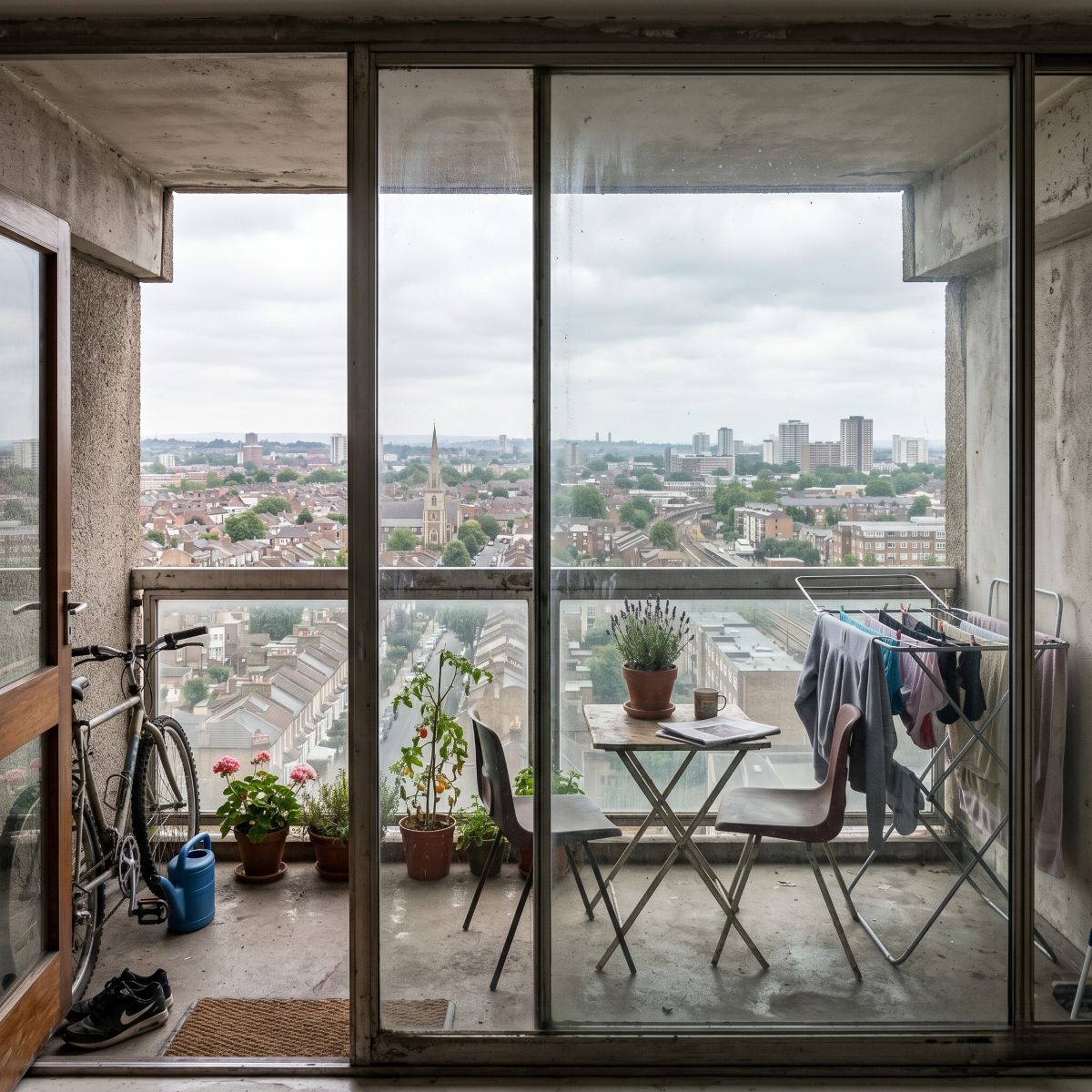
A balcony on a high London flat offers a view worth keeping clear, but cleaning the glass and railings that frame it is not the same job as wiping a kitchen window. Several floors up, with a hard street or another balcony directly below, the ordinary instinct to lean out, stretch a little further or balance a bucket on the rail turns a simple chore into something genuinely dangerous – to you and to anyone passing beneath. The good news is that you can keep balcony glass sparkling and railings spotless without ever putting yourself at risk, provided you accept that some parts of the job are yours to do and some are best left to people with proper access equipment. This guide is built around that distinction, covering how to clean everything you can safely reach, how to set up so nothing falls, and where the sensible line sits between a satisfying afternoon’s work and a job that belongs to a professional.
Why Height Changes Everything About This Job
The risks that make a balcony different from any window
Before any cleaning begins, it is worth being honest about why a high balcony deserves more caution than any window inside the flat. The obvious risk is a fall. Balustrades and railings are designed to stop you going over, not to be leaned across, climbed on or used as a handhold while you stretch for the far corner of a glass panel. The moment your weight shifts over the rail, or your feet leave the floor onto a chair or planter, you have created a fall risk that no clean window could ever justify.
The less obvious risk is to everyone below. A dropped sponge is harmless; a dropped bucket, bottle of cleaner, squeegee or scraper falling several storeys onto a London pavement or a neighbour’s balcony can cause serious injury. At height, anything not held or contained is a potential falling object, and busy streets below mean the ground is rarely truly empty.
Wind adds a third factor that ground-level cleaning never involves. Several floors up, gusts are stronger and less predictable, they blow spray back into your face, snatch at cloths and can unbalance you at exactly the wrong moment. Understanding these three risks – falling, dropping and wind – is what shapes every safe decision that follows, and it is why the approach here is built around staying well within your limits rather than testing them.
The Golden Rules of Working Safely at Height
Feet on the floor, nothing over the edge, and knowing your limits
A handful of non-negotiable rules keep this job safe, and they are worth fixing firmly in mind before you pick up a single cloth. The first and most important: keep both feet flat on the balcony floor at all times. Never stand on a chair, stool, planter, step or anything else to gain height or reach, because an unstable platform at altitude is how serious accidents happen. If you cannot reach something with both feet planted, treat it as out of your reach rather than a challenge to overcome.
The second rule: never lean your body out over the railing. Clean only what you can comfortably touch while standing upright and balanced inside the balcony. The temptation to lean for the outer face of the glass or the far side of a rail is precisely the temptation to resist, every time.
The third rule concerns everything you bring out there. Nothing should be placed on top of the railing or balustrade, where a knock or a gust could send it over the edge. Keep cleaning liquids in closed or securely held containers, use the smallest quantity of water you can, and keep tools either in your hand or in a stable container on the floor well back from the edge. A wrist strap or lanyard on a squeegee or scraper stops it slipping from wet hands. These rules are not excessive caution; they are the difference between a routine clean and a genuine emergency.
Picking the Right Day and Setting Up Safely
Weather, wind and a setup that can’t fall
The conditions you choose to clean in matter as much on a balcony as the technique itself. Wait for a calm, dry day with little or no wind, because even a moderate breeze several floors up makes everything harder and less safe, blowing spray back, lifting loose items and disturbing your balance. A still, overcast day is close to ideal. Avoid bright direct sunshine too, not for safety but because it dries cleaner on the glass within seconds and guarantees streaks – a problem made worse by London’s hard water.
Set up with a place for everything before you start, all of it kept low and back from the edge. A small amount of cleaning solution in a stable, contained vessel is far safer than a brimming bucket, and you need very little. Lay out your cloths, squeegee and other tools on the floor against the wall of the flat, not on the rail, so reaching for them never takes you towards the edge.
Clear the balcony of clutter first so you have firm footing and nothing to trip over while your attention is on the cleaning. Dress sensibly in non-slip footwear, since a balcony floor turns slippery the moment water is on it. And if you live in a managed building, check whether the lease or building management has rules about balcony cleaning or window access, as many London developments have arrangements in place for exactly this.
Cleaning the Glass: Inside, Reachable Outside, and What to Leave Alone
Streak-free panels without leaning into danger
With the setup safe, the glass itself is straightforward to clean to a streak-free finish. The inner face of any glass balustrade or panel is fully accessible from inside the balcony and can be cleaned as you would any window: a microfibre cloth or soft sponge with a little washing-up liquid or glass cleaner, worked over the surface, then drawn off with a squeegee in overlapping strokes and finished with a dry microfibre buff. Avoid any abrasive pad or scouring product, as these scratch glass permanently.
The outer face is where judgement comes in. The lower portion of the outside of a panel can sometimes be reached safely from a standing position, or with an extendable reach-and-wash pole that lets you clean without leaning out at all. A telescopic squeegee or soft-bristled pole tool is the safe way to extend your reach, keeping your feet planted and your body inside the rail. If a pole reaches it comfortably and safely, clean it; if reaching it means stretching, leaning or straining, leave it.
The upper outer faces and anything beyond comfortable pole reach should simply be accepted as outside your scope. London’s hard water will spot the glass over time, and a quick buff to remove water before it dries slows that, but no streak or watermark is worth leaning over a railing to reach. Clean what the rules above allow, and let the rest wait for someone properly equipped.
Cleaning the Railings: Matching the Method to the Metal
Stainless steel, powder-coated aluminium and what damages them
Railings need a method matched to what they are made of, because the wrong product can damage the very finish that protects them. Powder-coated aluminium, common on modern London balconies, has a baked-on coloured coating that is durable but not invincible. Clean it with nothing stronger than warm water and a little mild washing-up liquid on a soft cloth, then rinse and dry. Abrasive pads, scouring powders and harsh solvents all damage the coating, and once it is scratched or worn through, the metal beneath is exposed to the weather.
Stainless steel railings look tough but have their own sensitivities. Mild soapy water suits everyday cleaning, and a dedicated stainless steel cleaner restores shine, but wipe along the direction of the grain rather than against it, and never use chlorine bleach or abrasive scourers, which can pit and permanently mark the surface. A microfibre cloth buffs it back to a clean lustre without scratching.
Whatever the metal, a few principles hold. Use the minimum water needed and dry the railings afterwards rather than leaving them wet, both to prevent water spotting and to avoid slippery surfaces. Reach the joints and the underside of handrails where grime collects, but only where you can do so safely from inside the balcony. And never use a railing to brace or support yourself while cleaning, no matter how solid it feels, since it was built to be a barrier rather than a handhold.
When to Stop and Call a Professional
The exterior of high glass and the jobs not worth the risk
The most important judgement in this whole task is knowing where your safe limit lies and respecting it without hesitation. The full exterior face of glass balustrades on a high flat, the upper outer panels, and anything that can only be reached by leaning, stretching or climbing are not jobs to attempt yourself, however much you would like the glass to gleam all over. These are the very situations professional window cleaners exist for, working with proper access equipment, harnesses, reach poles and the training and insurance to use them at height.
There is no failure in handing these parts over. Professionals who clean high-rise glass across London work with rope access or specialist poles designed for facades that cannot be reached safely from a balcony, and they carry the public liability cover that matters when working above a busy street. For a leaseholder, it is also worth remembering that exterior window and facade cleaning is sometimes arranged by the building management as part of the service charge, so the job may already be someone else’s responsibility.
The principle to hold onto is simple: clean everything you can reach with both feet flat on the floor and your body inside the rail, and treat everything beyond that as a job for someone equipped for it. A spotless balcony is a fine thing, but it is never worth a fall or a falling object. Work within your reach, set up so nothing can drop, choose a calm day, and the parts of the job that are safely yours will leave the glass clear and the railings gleaming.